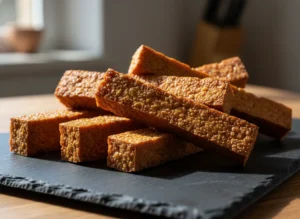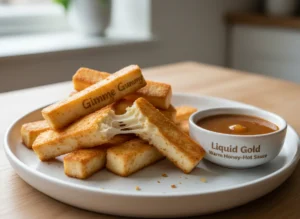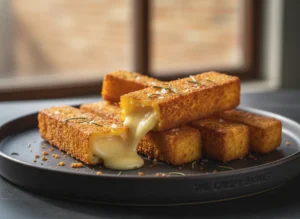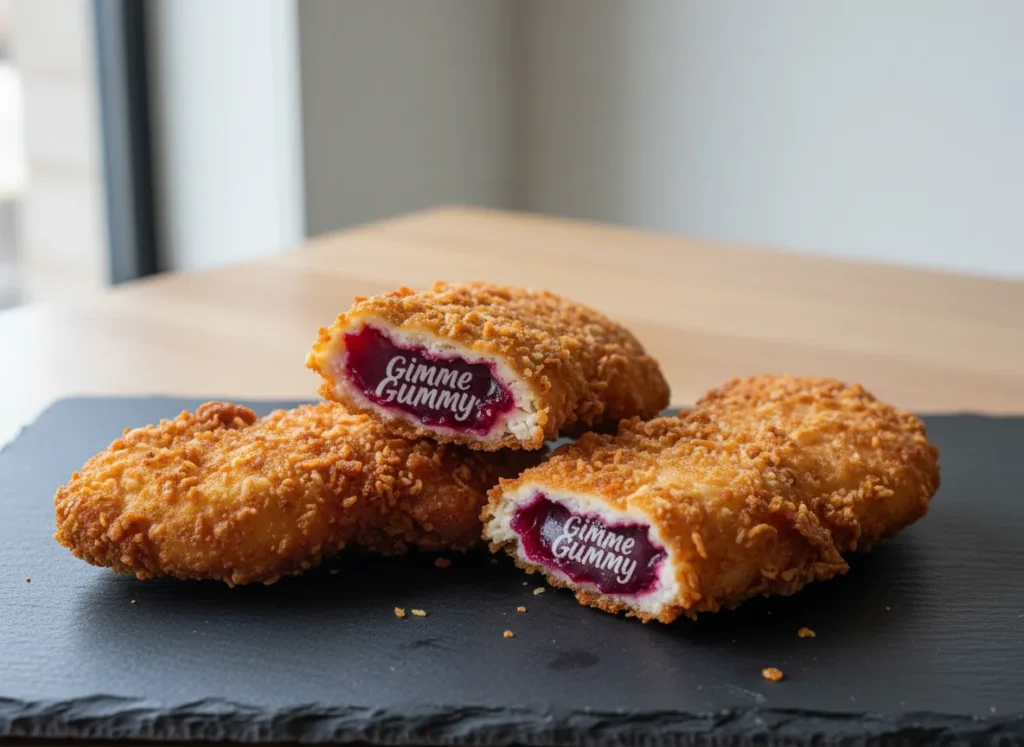
The 2026 Texture War: Why We Demand the Snap
In the hyper-accelerated culinary landscape of 2026, we have collectively evolved past the “soft” era. We are in the age of Structural Maximalism. At “The Crispy Basket,” we believe that the humble chicken tender—long the victim of cafeteria-grade mediocrity—is the ultimate canvas for textural transformation.
The tragedy of the traditional chicken tender is “The Moisture Leak.” When you fry or bake chicken, the internal steam fights against the breading, turning it into a soggy, detached husk. We’ve staged a mutiny against this physics-based failure. By leveraging the “Starch-Seize” protocol, we are forging a crystalline fortress that clinks like glass but yields to a succulent, “Gimme Gummy” velvety interior. This is the 15-minute victory your weeknight deserves.
The Science of “Structural-Seize” and the Crunch Coefficient
The secret to the perfect tender lies in the “Tornado Effect”—high-velocity, 400°F convection air—and the mathematics of surface area. We want to maximize the “Crunch Coefficient” ($C_c$), which is the ratio of crystalline surface points to total volume:
$$\text{Crunch Coefficient } (C_c) = \frac{\text{Surface Area of Crystalline Shards}}{\text{Internal Volume of Protein}}$$
To achieve a high $C_c$, we utilize a “Double-Armor” system. By using a cornstarch-based “primer” followed by a jagged Panko-Parmesan “topcoat,” we create a multi-layered lattice. When hit by the air fryer’s intense wind, the cornstarch dehydrates at an exponential rate, “seizing” the crust to the chicken fiber. This creates a non-porous cage. The steam generated inside the chicken cannot escape through the crust; instead, it is forced back into the meat, essentially “pressure-steaming” the chicken into a “Gimme Gummy” state—tender, bouncy, and velvety—while the outside “shatter-sets” into a rigid savory wafer.
The Structural Architecture: Ingredient Breakdown
| Ingredient | Role in Texture | The “The Crispy Basket” Standard |
| Chicken Tenderloins | The “Gimme Gummy” Foundation | Fresh, never frozen. The “tenderloin” cut ensures the most velvety interior. |
| Cornstarch Primer | The “Starch-Seize” Glue | Creates the non-porous crystalline veil that prevents breading slip. |
| Panko & Parmesan | The “Shatter-Crust” Shell | A 2:1 ratio of jagged breadcrumbs and finely grated cheese for the glass-like snap. |
| Smoked Paprika & Garlic | The Aromatic Snap | Triggers the Maillard reaction for a deep mahogany-gold finish. |
| Avocado Oil Spray | Heat Conduction | High smoke point ensures the “Flash-Sear” on the Panko ridges. |
The Step-by-Step Culinary Narrative
1. The “Surgery” (The Prep Phase):
Precision is the only way to avoid the “Gummy Slump.” If your tenders have that tough white tendon, remove it. Execute the “Bone-Dry” Mandate: pat the chicken with paper towels until it is virtually tacky. Moisture on the surface is the direct cause of the breading falling off.
2. The Primer Phase (The Starch-Seize):
Dredge the dry chicken in cornstarch first. Shake off the excess until it looks like a ghostly, translucent veil. This is your “Structural-Seize” layer; it acts as the anchor between the wet egg wash and the dry breading.
3. The Armor Application:
Dip the primed chicken into a seasoned egg wash (eggs + a dash of hot sauce for acid-tenderization), then press into your Maximalist Panko-Parmesan Armor. Press with maximalist aggression. You aren’t just coating; you are fusing.
4. The Tornado Forge (The Fry):
Preheat your air fryer to 400°F. Arrange the tenders in a “No-Touch” configuration. Overcrowding creates a steam-pocket, which is the direct cause of the “Soggy Sponge” tragedy. Mist generously with avocado oil. Hit them with the 400°F wind for exactly 10–12 minutes.
5. The Final Clink:
Remove the basket when the tenders sound like rigid wooden blocks clinking together. Let them rest on a wire rack for 3 minutes. This allows the internal juices to settle and the crystalline starch to fully “harden” into its final shatter-crisp state.
Advanced Pro-Tips & Troubleshooting
- The “Breading-Slide” Disaster: If your crust falls off, you skipped the cornstarch primer or didn’t dry the chicken enough. The primer is the glue of the 2026 kitchen.
- The “Zero-Snap” Tragedy: If the crust is pale and soft, you didn’t use enough oil spray. The oil acts as a heat conductor, focusing the convection energy directly into the Panko ridges.
- The “Leftover Redemption”: To reheat, avoid the microwave at all costs. 4 minutes in the air fryer at 375°F will reactivate the “Shatter-Crust” architecture and make them taste better than the first day.
The Pairing Strategy: Functional Snap and Liquid Gold
We pair these Shatter-Crust tenders with our Fermented Honey-Mustard Cabbage Crush. The probiotic-rich acidity of the cabbage, mixed with raw honey and stone-ground mustard, acts as a “fat-cutter,” resetting the palate after the rich, savory snap of the chicken.
Drink Pairing: A Crisp Dry Sparkling Apple Cider or a High-Acidity Lemon-Ginger Seltzer. The effervescence and acid act as a palate cleanser, lifting the savory parmesan from the tongue and making every bite feel as light as the first.