The 2026 Texture War: Why Lamination is King
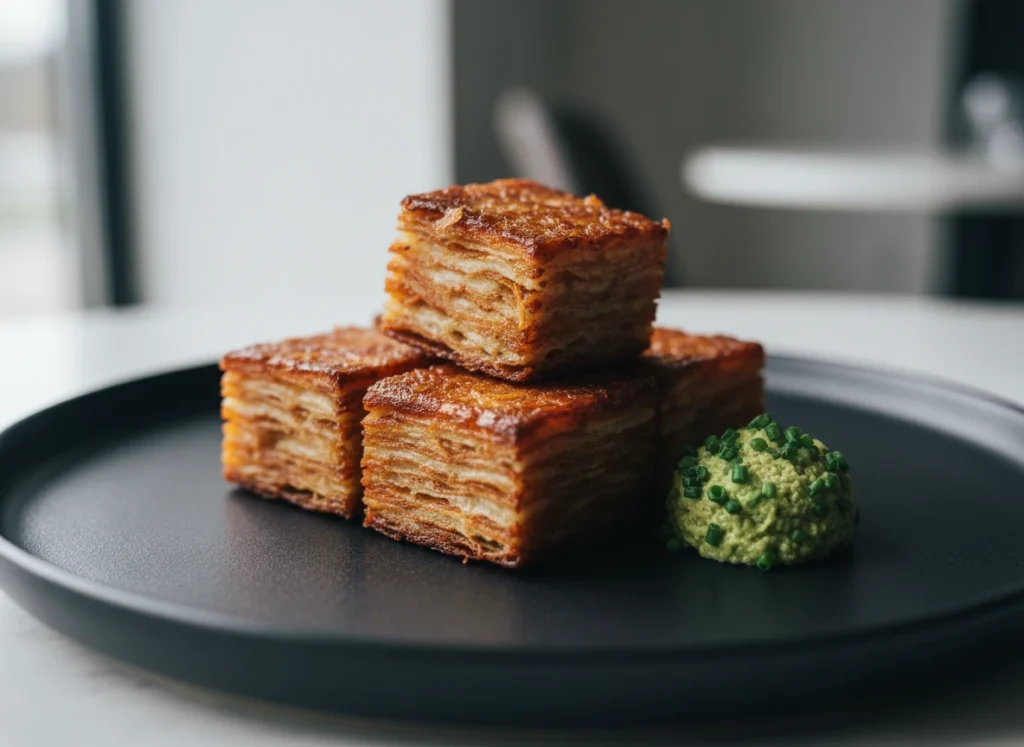
In the hyper-visual, ASMR-driven food culture of 2026, the potato has undergone a radical transformation. We are no longer satisfied with the simple fry or the rustic wedge. We are in the era of “Culinary Architecture.” The 1,000-Layer Potato Pavé is the undisputed sovereign of this movement. It represents a “Maximalist” approach to the starch—where the goal is to create as many microscopic “shatter-points” as possible.
By thinly slicing potatoes and laminating them with butter, we aren’t just making a side dish; we are building a convection-ready fortress. At “The Crispy Basket,” we’ve perfected the method to ensure that every single edge turns into a crystalline glass shard, while the center maintains a “Gimme Gummy” velvety texture that rivals the finest French silk.
The Science of “Starch-Lamination”
The Pavé works because of a phenomenon we call “The Compression-Expansion Cycle.” When you thinly slice a potato (ideally to 1mm thickness) and layer it, you are creating a dense block. By compressing this block overnight, you force the starch to act as a natural adhesive.
When this compressed block is sliced into cubes and hit by the “Tornado Effect” of 400°F air, two things happen simultaneously:
- The Dehydration Snap: The exposed edges of the hundreds of layers dehydrate at a high velocity. Because these edges are so thin, they transform into crystalline wafers almost instantly.
- The Internal Steam-Lock: The dense, compressed interior is shielded by the outer layers. The butter between the layers begins to emulsify with the potato’s natural moisture, “pressure-steaming” the core into a “Gimme Gummy” velvety reservoir.
This results in a bite that offers a rhythmic, multi-layered crack before melting away into a sweet, buttery finish.
The Structural Architecture: Ingredient Breakdown
| Ingredient | Role in Texture | The “The Crispy Basket” Standard |
| Russet Potatoes | The Starch Foundation | High starch content is mandatory for the “Starch-Seize” lamination. |
| Clarified Butter (Ghee) | The Conductor | Provides the “liquid gold” fat that fries the layers from the inside out. |
| Coarse Sea Salt | The Wicking Agent | Draws out surface moisture to ensure the “shatter-set” edges. |
| Fresh Thyme | The Aromatic Snap | Infuses the fat with savory depth that anchors the potato’s sweetness. |
The Step-by-Step Culinary Narrative
1. The “Surgery” (The Slicing Phase):
Precision is the law here. Using a mandolin, slice your peeled Russets into 1mm translucent rounds. They should be so thin they are virtually flexible. Toss them in a bowl with melted clarified butter and salt, ensuring every single slice is coated in a microscopic veil of fat.
2. The Lamination (The Build):
Line a small rectangular tin with parchment paper. Begin layering the slices one by one, like you are building a brick wall. Every 10 layers, press down with maximalist aggression. This isn’t just about stacking; it’s about fusing the starch.
3. The Cold-Set (The Compression):
Bake the tin at a low temperature (300°F) for 1 hour to soften the starch, then place a weight on top (another tin with cans works perfectly). Refrigerate for at least 12 hours. This is the “Structural-Seize” moment. The potato becomes a solid, workable brick.
4. The Forge (The Convection Blast):
Unmold the brick and slice into 1-inch cubes. You should see the visible “pages” of the potato. Place them in the air fryer in a “No-Touch” configuration. Hit them with 400°F for 12–15 minutes. Watch as the edges begin to “bloom” and char into a deep mahogany-gold.
5. The Final Clink:
When you remove the basket, the Pavé bites should sound like pebbles hitting a glass bowl. That “clink” is your proof of victory.
Advanced Pro-Tips & Troubleshooting
- The “Grey-Core” Tragedy: If your Pavé turns grey, it means you didn’t compress it enough or your potatoes oxidized before they hit the butter. Work fast and press hard.
- The “Breading Slip” (Without Breading): If the layers slide apart in the air fryer, the starch didn’t set during the “Cold-Set” phase. Ensure you bake it low and slow before the final chill.
- The “Zero-Grease” Hack: Using clarified butter (Ghee) ensures a higher smoke point, meaning you get a “shatter-crisp” finish without the oily aftertaste of regular butter.
The Pairing Strategy: Functional Snap and Liquid Gold
We pair these 1,000-layer wonders with a Fermented Garlic & Chive Cabbage Crush. The probiotic acidity of the cabbage cuts through the intense, buttery richness of the potato layers, resetting the palate for the next crystalline snap.
Drink Pairing: A Crisp Dry Pear Cider or a Sparkling Lemon-Ginger Infusion. The carbonation helps “lift” the starch from the tongue, making every bite feel as light as the first.